Expo West 2026: Natural Food Ingredient Trends
We just got back from Expo West 2026, and if you want the honest takeaway: the bar has been raised. With over 80,000 attendees and more than 3,000 exhibitors on…

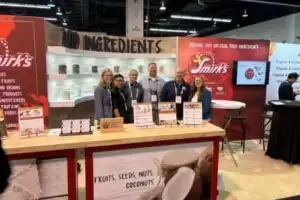
We just got back from Expo West 2026, and if you want the honest takeaway: the bar has been raised. With over 80,000 attendees and more than 3,000 exhibitors on the floor, this year’s show was one of the largest in recent memory. But what struck us most wasn’t the scale. It was the intention behind it. In Episode 19 of Get the Scoop with Smirks, Elisa Louis and Zach Schwindt break down the standout Expo West 2026 ingredient trends. The natural food ingredient market trends 2026 shaping natural food formulation right now, including functional beverages, protein and fiber combinations, and more. Here’s what you need to know.
Function Over Novelty: The Shift That Defined the Show
Walking the floor, something was immediately clear. As Elisa put it during the episode, “Ingredients are definitely working harder.” The products that stood out weren’t just interesting, they were solving multiple problems at once. Satiety, gut health, hydration, energy, and clean label integrity were all expected to coexist in a single SKU.
That is a high bar. And yet, the brands meeting that bar were the ones generating the most buzz.
Protein + Fiber: The “Fiber Maxing” Movement
Protein has been a dominant trend for years, but at Expo West 2026, how protein is being used has meaningfully evolved. The story is no longer about simply adding protein to a product and calling it innovation. It’s about protein and fiber combinations in smarter, more purposeful systems.
Elisa introduced us to the term: “Fiber maxing, brands are stacking fiber types to maximize gut benefits, satiety, and texture all in one bite.” Think chia, flax, psyllium, and seed flours layered together, then paired with protein sources like pea protein isolate, quinoa, pumpkin seeds, amaranth, or collagen.
The result? Formulations that deliver:
- Enhanced mouthfeel and texture without extra stabilizers
- Gut health support through prebiotic and fermentable fiber
- Sustained satiety that reduces the need for added sugars
- Protein functionality across multiple eating occasions
We also saw this play out in specific product formats. High-protein cereals using oat protein and sunflower protein, pancake mixes packed with pea protein and whey, and nutrient-dense snack bars built for GLP-1-influenced eating patterns. Think GLP-1 diet products that emphasize satiety. Lentils, too, are having a genuine comeback. Rich in both protein and fiber, we saw compelling lentil applications in chips, ready-to-eat meals, and even, as Zach noted, ice cream! Their appeal is practical and label-friendly: they check boxes consumers are actively looking for.
Takeaway for formulators: Look at your protein source and ask whether it’s also contributing to fiber, texture, and structure. If not, consider blending whole food proteins with isolated ones, and layer in complementary fibers to create a more complete ingredient system.
Hydration Grows Up: Coconut Water, Electrolytes, and Functional Beverages
Hydration is no longer just about electrolyte replacement. At Expo West 2026, the category looked more layered, more targeted, and more ingredient-forward than ever before.
Electrolyte powders, like coconut water powder, emerged as a standout base ingredient for electrolyte mixes and stick packs. Pink Himalayan salt was also prevalent. It adds mineral content and flavor depth without synthetic additives. Ready-to-drink products told a similar story: coconut water was everywhere, often paired with tropical flavors like mango, passion fruit, and açaí.
What we found especially notable, and what’s driving increased inquiries to us at Smirk’s, is the growing use of coconut water concentrate. As Zach explained, “Some brands incorporate coconut water concentrate at around 10% in their formulation, and that’s enough to give it a really sweet flavor” without relying on added sugars. It’s cost-efficient, clean-label-friendly, and functionally versatile.
Energy beverages followed a similar trajectory: protein energy drinks, matcha and moringa formats, functional shots targeting specific outcomes (stress, sleep, gut health, inflammation), and even pickle juice for muscle recovery. Functional beverage innovation is moving away from one-note solutions and toward precision positioning across functional beverages.
Takeaway for formulators:Hydration and energy are converging into a single functional category. Ingredient systems that deliver electrolytes, natural sweetness, and functional benefits simultaneously, like coconut water concentrate paired with adaptogens or functional fibers, are where the category is heading.
Dates, Alternative Dairy, and the Clean-Label Sweetness Story
If one ingredient consistently surprised us at this year’s show, it was dates. They appeared in candy, stuffed snack formats, date coffee, syrups, pastes, sugars, and chocolate applications. Formulators are drawn to dates for good reason: they deliver natural sweetness, binding functionality, and fiber. They are a single ingredient with an inherently clean label story. As Zach noted, “Date sweeteners may not need to be claimed on the nutritional panel as added sugar in some cases, which can help a product feel cleaner to consumers.” (Always verify current FDA guidelines for your specific application.)
On the alternative dairy ingredients front, the category has moved well beyond oat and almond. Pistachio, pecan, watermelon seed, chickpea, and corn-based milks all had a presence. Multi-source blends, ones combining cashew and macadamia for creaminess, or almond and oats for structure, are becoming more sophisticated. And coconut, as always, remained ubiquitous: appearing in milk, cream, powders, creamers, protein mixes, RTD beverages, and bakery applications. One innovation that genuinely stood out was a flat oat milk sheet requiring 94% less packaging. This is a compelling intersection of sustainability, convenience, and function.
Takeaway for formulators: Natural sweeteners like date paste, date syrup, and coconut water concentrate are increasingly viable alternatives to refined sugar in formulations where label clarity matters. Build your sweetness system around ingredients that also contribute structure, fiber, or other functional value.
Gut Health, Mushrooms, Sour Flavors, and the Signals Worth Watching
Gut health has quietly become a baseline expectation rather than a headline claim. Gut health ingredients such as psyllium, chia, and flax are being built into product structures (tortillas, crackers, brownies, puddings) not just added as afterthoughts. Prebiotic sodas, kombucha powders, and fermented ingredient inclusions reflect a consumer base that now simply expects gut-friendly formulation.
Mushrooms continued their expansion into coffee, broths, snacks, and beyond. Matcha was prolific, appearing in waffles, bakery items, and beverages. Zach pointed out the important distinction between ceremonial grade and industrial grade applications. Sour flavors had a notably stronger presence than in prior years, appearing in candies, gummies, probiotic drinks, and even date products. As Elisa noted, the sour trend has a functional angle too: triggering alertness and saliva stimulation without caffeine. A mechanism reportedly used by elite athletes including Olympic skiers.
Seed oil free callouts, non-ultra-processed (non-UPF) positioning, and simplified ingredient decks were visible throughout the show floor. Consumers are scrutinizing labels differently, and brands are responding by leaning into whole, recognizable ingredients: nuts, seeds, grains, lentils, coconut, collagen, and dates.
4 Natural Food Ingredient Market Trends 2026 from the Show
- Stack your ingredient systems. Single-function ingredients are losing ground to multi-tasking ones. Protein, fiber, fat, texture, and gut support should all be working together in your formulation.
- Coconut products are a versatile workhorse. From coconut water concentrate to coconut milk powder, coconut cream, and coconut oil — these ingredients deliver sweetness, stability, creaminess, and clean-label appeal across almost every application.
- Design for the GLP-1 consumer. Smaller portions, higher nutrient density, and satiety-forward formulation are no longer niche. These formats are reshaping how brands think about product architecture — especially for GLP-1 diet products with clear satiety benefits.
- Let the label do the work. Consumers want reassurance. Whole food ingredients that are inherently recognizable — lentils, dates, seeds, grains — provide functional performance AND a simpler, more trustworthy label story.
The Smirks Perspective: Ingredients That Do More
The real story of Expo West 2026 isn’t any single ingredient or trend. It’s that the market is demanding more thoughtful products. Products that deliver function, flavor, and integrity without feeling engineered beyond recognition.
As a bulk ingredient supplier, Smirk’s works with natural food brands and formulators every day to source the natural food formulation ingredients that make this kind of innovation possible. Whether you’re exploring coconut water concentrate for your next hydration beverage, looking for bulk date paste or date syrup for a clean-label sweetness system, sourcing psyllium or chia for a fiber-forward snack application, or just want a sounding board on where the market is heading, we’re here to help.
Ready to bring your next formulation to life?
📧 Reach out to us at whatsnew@smirks.com
🧪 Request a Sample of an ingredient you’re considering. We’d love to get something in your hands.
Elisa Louis [00:00:50]:
Hello and welcome back to get the Scoop with Smirk’s podcast. I’m Alisa Lewis and with me today is
Zach Schwindt. Zachary, I’m excited to break down ingredient and product trends at Expo West 2026.
Zach, thanks for joining me. Welcome back to the podcast. Are you ready to unpack Expo?
Zach Schwindt [00:01:10]:
I am. Thank you for having me, Elisa. First off, the numbers are impressive. Reports indicate that
There were over 80,000 attendees and more than 3,000 exhibitors this year. Smirk’swas well
positioned. We had boots in the Fresh Ideas Organic Marketplace at the Southern California IFT
Suppliers night. And then we were in Hall B in the main show. In the organic section.
Elisa Louis [00:01:34]:
Exactly. But to me, and I imagine you might agree, what really stood out wasn’t just the scale of this
show. It was how intentional everything felt. I mean, ingredients are definitely working harder.
Zach Schwindt [00:01:49]:
There was much less novelty and much more focus on function, efficiency, and how products
actually perform. So let’s get right into it. One thing we kept hearing over and over was protein and
fiber. But let’s be honest that we saw a lot of protein last year. Is there anything new going on?
Elisa Louis [00:02:09]:
Yeah, I see a subtle shift here, but it’s pretty important. It’s not just about protein or fiber anymore. It’s
about how they’re combined in smarter ways, especially as part of the whole fiber maxing
movement.
Zach Schwindt [00:02:24]:
Fiber maxing? I’ve never heard of that term. Let’s talk about it. What is fiber maxing?
Elisa Louis [00:02:30]:
Basically, brands are stacking fiber types. So for example, chia, flax, psyllium, even seed flowers to
maximize gut benefits, satiety and texture all in one bite. And they’re combining that with protein
sources. Isolates like pea protein or whole food proteins like quinoa, pumpkin seeds or amaranth, or
sometimes collagen to enhance protein functionality.
Zach Schwindt [00:02:58]:
So it’s not just nutrition, it’s functionality that achieves multiple outcomes.
Elisa Louis [00:03:03]:
That’s right. These ingredients systems let you build protein and fiber into the product structure,
enhance the mouth feel and texture without extra stabilizers, they support gut health and they reduce
the need for added sugars while keeping the product satisfying. I mean, even nuts and seeds,
almonds, cashews, pistachios, sunflowers are multitasking protein, fat, texture and fiber all at once.
Zach Schwindt [00:03:33]:Where else did you see this playing out as you were at the show?
Elisa Louis [00:03:37]:
Yeah, across categories, we’re seeing protein pancakes packed with oat flour, pea protein, whey and
milk protein, high protein cereals using ingredients such as oat protein and sunflower protein, whey
protein and seed blends. Also noteworthy, there are nutrient dense formats influenced by GLP1,
which are designed to help you feel full and satisfied. And across the board, gut health is still very
much a consideration. Prebiotics, fibers and fermentable ingredients are woven into many of these
products.
Zach Schwindt [00:04:15]:
So protein, fiber and gut friendly ingredients aren’t just trendy buzzwords anymore. They’re real
workhorses. Brands are stacking them together so the product or snack actually keeps you full,
supports your digestion and tastes good too.
Elisa Louis [00:04:29]:
Exactly. And it really appears that formulators are intentionally blending isolates whole food,
proteins, collagen and fiber to deliver a feeling of fullness, structure, and the gut benefits that you
mentioned. I mean, some ingredients stand up well on their own, though, like lentils. Lentils are now
being used in really modern ways, which is really interesting to see, partly due to their high protein
and fiber content. So now we saw products like lentil chips and ready to eat lentil meals.
Zach Schwindt [00:05:01]:
I noticed a lot of brands who were using lentils, whether it’s in a. I even saw lentils being incorporated
into ice cream, which I thought was incredibly unique. So, yeah, I definitely noticed a lot of different
lentil applications.
Elisa Louis [00:05:16]:
Yeah, I mean, I feel like lentils. I mean, people are eating lentils, but I think they were probably due for
a sort of a reboot because people had an idea, at least from my perspective perhaps, that they’re a
little bit old fashioned, but. Cause I remember my grandmother making them and I hadn’t really
necessarily incorporated them that much into my own diet. But now I’m seeing all these products out
there, like we mentioned, that kind of make me want to go, well, what else can I do with lentils? Or
what other products are out there that incorporate lentils because they are high in protein and fiber,
they check a
Zach Schwindt [00:05:58]:
lot of boxes for what people are looking for right now, so.
Elisa Louis [00:06:02]:
Exactly. Well, shifting gears, Zach, it really felt like hydration products leveled up this year.
Zach Schwindt [00:06:11]:You’re correct. Electrolytes expanded across two main formats, powders and Then ready to drink
beverages. Powdered electrolytes were everywhere from stick packs to drink mixes. Brands were
really leaning into clean label formulations, sometimes pairing them with collagen or other functional
add ons. One ingredient that we saw popping up a lot was coconut water powder. The ingredient
creates a perfect base for a lot of these electrolyte mixes. We also saw pink Himalayan salt utilized
in a lot of the stick packs as well, which is a natural, mineral rich ingredient, adding both flavor and
electrolytes.
Elisa Louis [00:06:51]:
Yeah, this really must explain, Zach, why we’re getting more and more inquiries for bulk coconut
water powder from my perspective. And how about the ready to drink products?
Zach Schwindt [00:07:03]:
Coconut water was abundant this year in ready to drink hydration products. There were more brands
of coconut water coupling them with tropical blends like mango, passion fruit, acai. So there was
definitely a lot of that this year. And coconut water concentrate, I’ve noticed, has been a product
that’s popped up significantly.
Elisa Louis [00:07:24]:
Absolutely, I’ve noticed that as well. I mean, first off, to your point, there were more brands this year,
even just of coconut water without any additives, I noticed. And then as you mentioned, there were
these brands that were coming up with these interesting combinations of different flavors going into
the coconut water, which I found fascinating. But it definitely seems like to your point that coconut
water concentrate is a great option for these brands to be using.
Zach Schwindt [00:07:55]:
Absolutely. But it’s something that us at Smirk’scan supply as well. And the coconut water
concentrate will offer cost savings over for just standard coconut water packed in drums. We see
some brands incorporating coconut water concentrate to provide a sweeter flavor as well in their
beverages without adding any added sugar. So there’s definitely some sweetness that you get from
the coconut water concentrate. And we see that in many larger brands today. Who are they have
maybe 10% coconut water concentrate in their formulation and that’s enough to give it a really sweet
flavor.
Elisa Louis [00:08:29]:
So it’s so interesting to see how this whole space has evolved. I mean, a while back, Sri Lankan
coconut water supplier told me that years ago, coconut water was really just a low cost beverage
that only the locals drank from the roadside stands. They consumed it directly from the coconut.
And a lot of the coconut water was actually being discarded back then when they were processing
the coconuts to make like desiccated coconut or to get the oil from the coconut. So it really wasn’t
until like the 2010s that the coconut water was really being packaged. And now of course, we’re
seeing it in tetrapak, aluminum, plastic and glass bottles. I mean, there’s such a variety of different
formats for it, but at the end of the day, it’s coconut water. It’s the best.Zach Schwindt [00:09:24]:
Yeah, that’s hard to imagine since coconut water and coconut water powder are in such high
demand nowadays, to imagine that they were just a byproduct at one point. In the beverage category,
energy is also coming into play with protein energy drinks, Matcha and Moringa formats and more
brands with functional shots are appearing on the shelves. Functional shots aren’t just about
immunity. They’re tiny powerhouses for energy, gut, health, inflammation, or even stress and sleep
support. Just a little sip and you’re targeting exactly what your body needs. We also saw pickle juice
for muscle recovery, which I thought was interesting. And another interesting ready to drink product
that we saw was ready to drink Orchata. A fun fact.
Zach Schwindt [00:10:12]:
In Spain, they used to use tiger nuts as the base for horchata, but in Mexico, rice is more commonly
used to make it. Since tiger nuts aren’t widely available in Mexico, I think a few of the horchatas that
we saw were using almond milk as the base, which is a new play on the beverage.
Elisa Louis [00:10:31]:
Yeah, such an interesting array of beverages. So hydration, energy and function. They seem like they
are all merging.
Zach Schwindt [00:10:41]:
Exactly. Hydration is no longer basic, it’s packed full of function.
Elisa Louis [00:10:46]:
Zach, another trend I couldn’t help but notice. Dates were everywhere.
Zach Schwindt [00:10:53]:
Everywhere. And they were not in just one format.
Elisa Louis [00:10:56]:
But what stood out the most for you?
Zach Schwindt [00:10:59]:
You know, I think candy was a big one. Date based sour candies in flavor like blue raspberry or
watermelon, which I have never seen before. We even saw date coffee. A combination of dates and
coffee. It’s easier on your stomach and it tastes great. A lot of people don’t like that bitter black
coffee. And when you add dates into it, it can be quite pleasant.
Elisa Louis [00:11:23]:
Oh, I mean, such an interesting combination. I totally agree. It was delicious. And how about on the
snack front with dates?
Zach Schwindt [00:11:31]:
Stuffed dates I noticed were huge. And nut butter stuffed dates. And that’s a full system. Sweetness
from dates, protein and fat from nuts and fiber from both.Elisa Louis [00:11:43]:
Great combination there. What other date products caught your attention? I know there were more.
Zach Schwindt [00:11:50]:
Yeah, I mean we saw date paste syrups and sugars being utilized in formulations, not just finished
products. Brands are using them to build layered sweetness systems that reduce refined sugar.
Dates bring natural sweetness, binding and fiber. So there’s a lot of benefit from adding dates into
your application. Date sweetened chocolate and chocolate chips are an example and part of the
appeal for formulators is how dates show up on labels. In some cases, dates used as a sweetener
may not need to be claimed on the nutritional panel as added sugar. And that can help a product feel
cleaner to consumers, even though the total sugars still appear on the nutritional facts. That said,
you still want to consult the FDA guidelines carefully to make sure that you’re in compliance.
Zach Schwindt [00:12:37]:
Shifting gears, how about on the alternative dairy front? It seems to keep evolving and it’s definitely
more complex than almond or oat milk, right?
Elisa Louis [00:12:47]:
I mean, beyond oat milk and almond milk, we’re seeing pistachio, pecan, watermelon seed and multi
source blends, including combining roasted soybeans with nut milks. Formulators are combining
cashews and macadamia for creaminess, almonds and oats for structure, coconut milk and coconut
cream for stability. Also new, we discovered corn and chickpea based milk which also contained
coconut oil in its ingredient deck. It’s no surprise that once again, coming back to kind of the
inquiries that Smirk’sgets, we’re certainly getting a lot more inquiries for coconut cream and coconut
milk and coconut oil. These are definitely in the mix. But on the oat milk side, even though it’s not
new, we saw an eco friendly flat oat milk sheet which requires 94% less packaging. So an interesting
concept. Apparently you soak it overnight or you hydrate it and you blend it at home.
Zach Schwindt [00:13:58]:
Yeah, I mean, that’s seriously innovative. You know, you see a lot of stuff at the show and it’s kind of
a little knockoff of something you saw last year. But the oat sheets is something I just have never
totally blew my mind coming across those things. So like you said, there’s plenty of ways coconut
milk powder is being used, or coconut in general seems to be very, very much active. But coconut
milk powder we notice being utilized in non dairy inclusions in ready to drink beverages, as well as
used in powder form for coffee creamers and protein mixes and bakery mixes as well.
Elisa Louis [00:14:33]:
Oh, absolutely. This category of coconut is not only big for smirks, but it is all over that Expo west
floor. There’s no question about it.
Zach Schwindt [00:14:45]:Yeah, and you wonder if that coconut’s no longer considered a tree nut allergen. So I think a lot of
brands are also much more comfortable using coconut, whereas ZeroWind 5 years ago that might
have not been the case.
Elisa Louis [00:14:59]:
That’s a great point. That kind of escaped me because that was a little while ago. But you’re right,
and now we’re seeing that maybe that’s starting to pick up here in terms of a trend.
Zach Schwindt [00:15:13]:
Right.
Elisa Louis [00:15:14]:
If we shift gears again, I gotta say, Zach, there was so much more meat at this show.
Zach Schwindt [00:15:21]:
Absolutely. I mean, we’re used to the fake meats or as they say, but actual meats. Plan based meats,
plant based meats. Yes, we’re definitely real meats seem to be having their moment now. We saw it
last year, but meat sticks and savory protein innovation is expanding. Meat sticks and bone broth.
Going back on the meat stick side, it isn’t about plant based meat. These are real meats.
Zach Schwindt [00:15:48]:
Using chicken, different flavors to kind of create a new product for consumers who are looking for a
quick, easy bite of protein as they go about their day.
Elisa Louis [00:15:59]:
Oh, absolutely. I saw, like you said, chicken and more turkey options to go along with the original beef
and pork that we typically see. And flavor innovation is really stepping up. I mean, smoky chipotle,
honey barbecue, herb blends, maple sweetened, to name just a few. I’m sure you saw some more
too, and they’re just popping up at the retailers on the shelf.
Zach Schwindt [00:16:26]:
Yeah, I mean the innovation is definitely there on the meat stick side. You know what’s also
interesting is that Smirk’sis working with some meat stick companies supplying them with coconut
aminos to create a enhanced umami flavor without adding the soy allergen. We also saw collagen
rich bone broth continue to be relevant functionality and new flavors including added mushrooms,
coconut and turmeric. These are definitely new things that stuck out to us this year as we observed
the meat stick category.
Elisa Louis [00:17:00]:
So really interesting. So whether it’s a meat stick or a cup of bone broth, the trend is clear. I mean
function, flavor and creativity all working together.
Zach Schwindt [00:17:11]:
And gut health is also still very strong, but it felt more integrated.Elisa Louis [00:17:17]:
Yes. I mean it felt like less of a headline, more of just the baseline for products. Right. I’m going to
name off some products. I mean, prebiotic chocolate sodas, organic smoothies with flax and chia,
Fermented drinks like Kombucha but now available in powder form. Gluten free brownies with flax
and chia incorporated and added also into snack bars and functional puddings. Psyllium as a binder
and texture system for gluten free tortillas and crackers. We’re seeing psyllium, flax and chia are
supporting gut health while adding structure and stability to the product.
Zach Schwindt [00:17:57]:
Yeah, and we can’t ignore the continued explosion of mushrooms and coffee snacks, broths. I mean,
almost any product you can imagine, you’d find something There that had mushrooms somehow
incorporated in it.
Elisa Louis [00:18:12]:
Absolutely.
Zach Schwindt [00:18:14]:
But the global flavors also remain strong. I noticed Mexican, Asian, Middle Eastern and more. But
how about sour as a flavor driver? There are sour candies, probiotic drinks, gummies, yogurts, dates
and bars. Sour definitely had a much larger place, I would say, than previous years. It seems to be
something that consumers are reaching for.
Elisa Louis [00:18:39]:
Right. The sour trend is real, achieved in different ways, I mean, including naturally with fruit
powders. Did you ever contemplate how sour foods can actually be functional?
Zach Schwindt [00:18:52]:
Not really, but tell me more.
Elisa Louis [00:18:55]:
Yeah, so professional athletes, including Olympic downhill gold medalists, skier Michaela Shiffrin,
eats sour candies prior to competition. You know that sour flavor triggers the alertness which
stimulates saliva and provides a quick glucose boost. It can spark intense focus. Mikayla isn’t alone
as sour snacks are said to be used by other ski racers, track and field athletes, baseball players and
hockey players too.
Zach Schwindt [00:19:27]:
Oh, that’s fascinating. What about the average consumer who is not a pro athlete?
Elisa Louis [00:19:32]:
Yes. The beauty of the sour product is that by stimulating saliva and triggering the trigeminal nerves
in the mouth, it’s a wake up signal for the brain. This translates into a boost without the need for
caffeine. I mean, this could be great for anyone. Maybe a study hack for college students.Zach Schwindt [00:19:56]:
Interesting. Yeah, I mean, usually I wake up, have a strong cup of coffee, and I was going through this
routine where I would take a cold shower as well just to kind of boost myself. And maybe some sour
candy is what I need in my morning routine, now that I think about it.
Elisa Louis [00:20:13]:
Gotta find those sour dates. Right? Well, hey, did you notice also that Matcha was prolific at this
show? To me, I mean, of course, so many people have now got Matcha in their routine. They’re
ordering it either hot or cold at their favorite coffee and tea shop as their drink of choice. And the
flavor is super popular. But now, I mean, you see it infused into many different beverages and with
different flavors stacked on it. Like strawberry, I noticed. And snacks and even waffles. That was
pretty interesting.
Zach Schwindt [00:20:56]:
I definitely noticed a lot of Matcha when some of the brands would call out the ceremonial grade.
But a lot of the industrial applications like the bakery items and whatnot that we saw, I believe they
use more of an industrial grade for the Matcha. So it’s interesting to understand that Matcha has a
very wide range of quality depending on the application. So I thought it was very interesting, some
people incorporating like the ceremonial Matcha into some of these snack products.
Elisa Louis [00:21:28]:
That’s definitely interesting because there’s definitely a premium price point on that. And the people
that are in the know about the ceremonial grade understand that it is the highest quality and you
don’t need very much of it. And you don’t want very much of it because it’s very intense. But it has its
own special qualities and special flavor. For sure. Mochi. When we’re talking about products from
Japan, I mean, mochi was having a moment too. And it’s not just mochi ice cream anymore, which
we’ve seen for a while, but mochi pancakes and waffles too.
Zach Schwindt [00:22:08]:
I did notice that we noticed some other trends at Smirk’sbut it came alive at Expo West. The seed oil
free callout was prevalent. Seed oil is being replaced by avocado, coconut oil and beef tallow, it
seems.
Elisa Louis [00:22:24]:
Yeah. I predict seed free is still in its infancy stages. I think that this is just the beginning. And
simplified ingredient decks, non UPF positioning that is ultra processed were highlighted too. Whole
food ingredients truly shine. I mean not seeds, grains, coconut for label, simplicity and functionality.
Zach Schwindt [00:22:49]:
So Expo 2026 in a nutshell.
Elisa Louis [00:22:52]:
Consumers want function, but they don’t want to compromise. The bar is higher, right?Zach Schwindt [00:23:00]:
Protein, fiber, hydration, gut health. They want it all tasting and feeling like real food.
Elisa Louis [00:23:07]:
And we’re seeing smaller sized portions gearing toward GLP1 diets. And to some extent hitting a
certain price point may be at play as well.
Zach Schwindt [00:23:16]:
Formulators are tasked with delivering function, experience and clean label integrity. Multitasking
ingredients. Seeds, grains, nuts, collagen and coconut are essential.
Elisa Louis [00:23:28]:
Yes, taste, texture and nutrition are all aligned.
Zach Schwindt [00:23:33]:
So it’s function without compromise. Taste, texture and nutrition are the baseline.
Elisa Louis [00:23:39]:
And yet the more complicated the criteria, the simpler the ingredients. I mean, because at the end of
the day, there’s so many staple ingredients that are really able to do the heavy lifting, including nuts,
seeds, grains and coconut products that we just mentioned.
Zach Schwindt [00:23:54]:
You know, this discussion reminds me it’s a lot of fun to work on opportunities to help formulators
with ingredients to help meet their functionality goals. Whether it’s chatting about a new idea,
sending product specifications, price indications or samples, or just getting customers connected
with our quality team to receive the quality documents they need, we’re here to help. We encourage
our listeners to reach out if we can help with ingredients or just be a sounding board. And if we don’t
have what someone is looking for, we’ll do our best to connect them to a partner in the industry who
does.
Elisa Louis [00:24:27]:
Absolutely. Thanks so much Zach for helping me break down Expo West 2026. This has been a great
conversation. By no means did we cover it all, but I think we touched on some of the highlights that
we saw. And for our listeners, be sure to stay tuned for our upcoming Market Report where we’ll take
a deeper dive into the ingredients shaping those trends. If you have any questions, don’t hesitate to
reach out by email@whatsnew@smirks.com thanks again for listening. Thank you, Zach. Appreciate
you.
Zach Schwindt [00:25:02]:
Thank you, Elisa
This post was informed by Smirks’ firsthand attendance at Expo West 2026 and Episode 19 of the Get the Scoop with Smirks podcast, featuring Elisa Louis and Zach Schwindt.
Smirks April 2026 Market Report

Macro market conditions
- Global instability is affecting ingredient markets broadly
- The conflict involving Iran is creating ripple effects across global supply chains.
- Key impacts include:
- higher oil and fuel costs
- logistics disruption
- increased ocean and over-the-road freight surcharges
- weaker consumer confidence
- These pressures are causing some suppliers to step back from the market on certain items because processing is becoming less economical.
- Consumer spending is tighter
- Retail movement has slowed, especially on higher-priced organic products.
- Slower shelf movement is now flowing upstream through the supply chain and reducing demand on many ingredients.
- Buyers are balancing tight consumer spending with limited backup inventory in the U.S.
- This market feels similar to 2022, but with a major difference
- In 2022, warehouses were full and importers were not buying.
- In 2026, after tariff volatility in 2025, there is much less extra inventory in the U.S.
- That means some buyers are scrambling for raw materials even while consumer demand remains uneven.
Sunflower seeds
USA sunflower market
- Current crop
- Firm and trending upward.
- Supply is tightening.
- Oil crushers continue buying raw material aggressively because oil markets are strong in both the U.S. and globally.
- New crop outlook
- Total acreage planted is reportedly up about 9% versus 2025.
- However, most of that increase is in oilseed acreage, not confectionery or non-oil sunflower.
- Acreage for non-oil/confectionery sunflower is reportedly down about 8% year over year.
- Weather
- Drought is a serious concern.
- Minimal winter moisture in growing regions raises risk.
- Western growing areas are facing extreme drought potential.
- Buying notes
- New crop contracts are available from U.S. processors.
- One bright spot: high-quality U.S. organic kernels are available for prompt shipment right now.
Bulgaria sunflower market
- Overall market tone
- Best described as dynamic.
- Two forces are competing:
- rising input costs
- substantial carryover stocks into the new season
- Cost pressure
- Bulgaria had some lag in pricing due to existing fuel reserves, but that cushion is expected to disappear soon.
- Diesel reportedly increased from about 1.2 euros/liter to 1.7 euros/liter.
- Fertilizer costs have reportedly risen around 60% since the start of the Iran conflict.
- Processor costs are rising across:
- energy
- transportation
- container shipping
- New crop and carryover
- Bulgaria is expected to enter the new season with meaningful carryover from the current crop.
- Farmers are still demanding higher prices for remaining stocks in storage to offset rising new crop input costs.
- Demand is currently quiet, which adds pressure to existing inventories.
- Growing conditions
- Conditions for the new crop are described as ideal.
- Slow rains have improved subsoil moisture significantly.
- Temperatures are favorable for germination and establishment after planting.
- Planting
- Acreage is expected to be close to last year.
Pumpkin seeds
China pumpkin market
- Government planting mandate
- China reportedly increased its farmland mandate for staple crops from roughly 50% to as much as 70%.
- This could reduce acreage available for specialty crops such as pumpkin and sunflower.
Giant skin pumpkin kernels
- Supply
- The 2025 crop was significantly smaller than 2024.
- That smaller crop drove dramatic price increases.
- New crop uncertainty
- High prices would normally encourage larger planting this spring.
- However, the new planting mandates make acreage uncertain.
- The market may not have clarity until May or June.
- Organic
- Organic giant skin kernels in China are expected to become extremely tight.
- Organic supply may run out soon and remain tight until the end of 2026, when new crop becomes available.
- U.S. stocks are limited following Chinese New Year.
- Some Chinese suppliers are already sold out.
Turkey as an alternative origin
- Shine skin pumpkin
- Turkey is emerging as an alternative to China.
- Turkish growers and processors are producing these seeds well.
- Farmers reportedly like the economics versus other crop options.
- First containers are already on the water.
- Turkey may become a helpful complementary origin with similar varieties.
Snow White and Lady Nail pumpkin
- Middle East disruption
- The Middle East is a major consumer of these Chinese pumpkin seed types.
- Due to the Iran conflict, an estimated up to 5,000 metric tons may be redirected back to China because delivery into the region is disrupted.
Coconut
Overall coconut market
- Market tone
- Dynamic, with conflicting signals.
- Processors are facing:
- higher energy costs
- lower demand
- Crude coconut oil remains firm because it is tied into biofuel markets.
- Recommendation
- Purchase spot coverage for 3 to 4 months at a time.
- Monitor the market rather than overcommitting.
Why Smirks recommends quarter-by-quarter buying
- Peak season is starting
- Major origins are entering peak season with fewer issues than in prior years.
- Yields are expected to be strong.
- Production conditions appear favorable.
- Chinese demand has softened
- Last year, China was aggressively buying for the coconut beverage boom.
- That demand appears to have eased.
- Vietnam-related demand is lower and Vietnamese prices are coming down significantly versus late 2025.
- Tariff and El Niño hangover
- Last year brought historically high coconut prices, then tariff impacts added more pressure.
- Even though many coconut items currently are not facing tariffs, higher-priced products are still sitting on shelves.
- Consumer demand in the U.S. has slowed.
- Fundamental read
- There are no obvious signs of a sudden rush on coconut right now.
- Demand has softened materially in the U.S.
Coconut sugar
- Supply
- Production has recovered following earlier El Niño-related slowdowns in Indonesia.
- Supply is not considered a near-term concern.
- Demand
- U.S. demand is softer.
- Inventory is relatively available and can be sourced fairly quickly.
Imported tree nuts
Cashews
- Market
- Firm.
- Shell-out ratios are reportedly down 2–3%, contributing to tighter economics.
- The supply chain is operating very hand-to-mouth.
- Cost drivers
- Higher shipping and energy costs are pushing finished kernel prices upward.
- Organic
- Organic broken cashews are very tight in the U.S.
- Prices for organic broken grades have risen about $0.20/lb in the last two months.
- Whole organic kernels have risen about $0.15/lb in the last two months.
Macadamias
- Market
- Demand is soft as new crop is coming in.
- Crop conditions look good and there are no major concerns so far.
- Buying note
- Smirks sees strong value in macadamias right now.
- Recommendation: consider booking further out.
Brazil nuts
- Market
- Calmer than a year ago.
- Crops are good and supply appears adequate.
- Processors began shipping in February, and new crop is already reaching the U.S.
- Price direction
- Prices are expected to decline as the season progresses.
- Buyers with flexibility may benefit by waiting.
- Buyers needing immediate coverage should expect to pay more than later-season arrivals.
- Organic Bolivia
- Organic has been more difficult this year.
- Government paperwork delays in Bolivia are slowing exports.
- This has created:
- longer lead times
- tighter organic supply
- Expectation is for improved stability later in the summer.
Imported grains and seeds
Amaranth
- Market
- Very tight and important to watch closely.
- India’s crop is very small this year and is expected to sell out quickly.
- Prices from India have risen nearly 50%.
- Peru remains expensive as well.
- Outlook
- Smirks expects the market to remain firm and tight.
- New crop harvest is happening now in India, but once that supply is gone, availability could become very limited.
Quinoa
- Market
- Prices remain firm in Peru and Bolivia.
- The market is waiting for new crop yield results.
- Prices remain elevated versus historical norms.
- Organic
- Organic quinoa is becoming harder to procure year after year.
- There is an expected shortage of organic red quinoa in the new crop.
Chia
- India’s role
- India is bringing some relief to the market after Paraguay’s volatile 2025 crop.
- Pricing has eased somewhat because India is adding supply.
- Timing
- Organic chia from India is not expected to ship until May, with U.S. arrivals estimated in July.
- Paraguay
- If conditions go well, significant chia could enter the market by late summer.
- However, Paraguay’s new crop typically arrives in the U.S. in October and November.
- Buying note
- Buyers should stay covered until at least Paraguay’s new crop timing.
- Adding both India and Paraguay to approved origin lists can improve purchasing flexibility and timing.
- India is expected to continue developing as a major chia origin.
Key takeaways from the April 2026 market report
- Fuel, freight, and geopolitical instability are pressuring ingredient costs.
- Consumer demand is softer, especially for premium organic retail products.
- U.S. backup inventory is not as deep as it was in prior volatile cycles.
- Sunflower, pumpkin, and amaranth deserve close attention due to acreage, crop, and supply risks.
- Coconut is not showing signs of immediate shortage, but it should be bought carefully in shorter windows.
- Cashews remain firm, while macadamias currently offer value.
- Brazil nuts appear more stable than last year, though organic supply remains slower.
- Chia may improve later in the year, but buyers should not leave themselves uncovered.
Ready to bring your next formulation to life?
📧 Reach out to us at whatsnew@smirks.com
🧪 Request a Sample of an ingredient you’re considering. We’d love to get something in your hands.
Categories
INGREDIENT INSIGHTS
Recent Posts

Expo West 2026: Natural Food Ingredient Trends
Apr 13, 2026
We just got back from Expo West 2026, and if you want the honest takeaway:…

ExpoWest Is Here, And We’re Ready
Mar 3, 2026
It’s that time of year again… ExpoWest 2026 is upon us. Where can you find…